

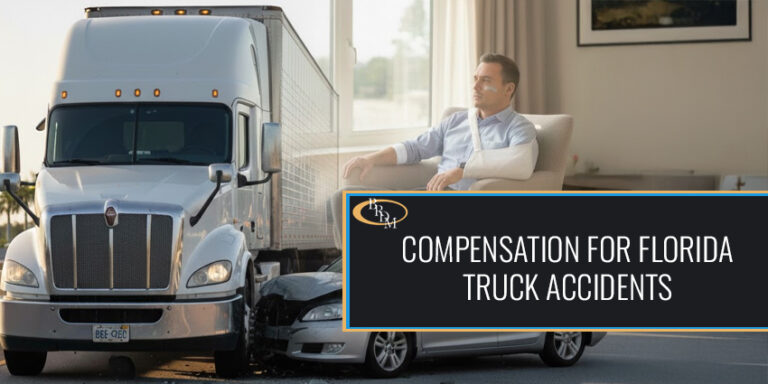
After a serious truck accident in Florida, one of the first questions people ask is simple. What is fair compensation for what I have been through? When medical bills, lost income, and long term injuries start piling up, understanding Florida truck accident compensation becomes critical. While some losses are easy to calculate, pain and suffering is far more difficult to define and value.
Unlike economic damages, pain and suffering does not come with a receipt. Still, it plays a major role in how Florida truck accident compensation is determined. Knowing how these damages are evaluated and which factors influence the final amount is critical, and an experienced Florida truck accident lawyer can help ensure your claim is not undervalued.
Table of Contents
Florida Truck Accident Pain and Suffering
Pain and suffering represent the human cost of a truck crash. It includes what you physically feel, how the injury affects your mental health, and how your daily life changes, not just the financial losses on paper.
While medical bills and lost wages are part of Florida truck accident compensation, they do not capture the full impact of a serious truck accident. Because these crashes often cause severe or permanent injuries, pain and suffering can make up a substantial portion of Florida truck accident compensation.
What Counts as Pain and Suffering
Florida truck accident compensation may include non-economic damages for real, life-altering harm, even though these losses do not come with receipts. Common examples include:
Physical pain and long-term symptoms
- Chronic back, neck, or joint pain
- Nerve damage, weakness, or numbness
- Reduced range of motion or mobility limitations
- Surgical complications or setbacks during rehabilitation
Emotional distress and mental health effects
- Fear of driving or riding in vehicles
- Anxiety, panic attacks, or depression
- Nightmares, sleep disruption, or hypervigilance
- Post-traumatic stress disorder after a violent crash
Loss of enjoyment of life
- Inability to exercise, travel, or enjoy hobbies
- Reduced participation in family or social activities
- Fatigue or pain that limits daily routines
Disfigurement and scarring
- Burns, deep lacerations, or surgical scars
- Ongoing pain, stiffness, or sensitivity
- Emotional distress or loss of confidence related to appearance
When these effects are supported by medical records, mental health evaluations, and personal testimony, they can significantly influence Florida truck accident compensation for pain and suffering.
The Limits of PIP and the Serious Injury Threshold
Florida’s no fault insurance system often creates confusion after a truck accident. While Personal Injury Protection coverage, known as PIP, is designed to provide quick access to medical care, it has significant limitations and rarely reflects the true impact of a serious truck crash.
PIP generally pays a portion of medical expenses and lost wages, but benefits in Florida are capped at $10,000 total. For many truck accident victims, those funds are exhausted quickly by ambulance transport, emergency care, hospital stays, surgery, and ongoing treatment. PIP also does not compensate for pain, suffering, emotional distress, or loss of enjoyment of life.
To recover these non-economic damages, Florida law requires that the injury meet the serious injury threshold. This threshold typically involves permanent injury, significant and permanent scarring or disfigurement, or the loss of an important bodily function. In truck accident cases, this requirement is often met because the size and weight of commercial vehicles can cause severe and lasting harm.
However, meeting the serious injury threshold is not automatic. Insurance companies frequently dispute whether an injury is permanent or severe enough to qualify. As a result, medical records, physician opinions, and consistent documentation play a critical role in establishing eligibility for pain and suffering damages and securing full Florida truck accident compensation.
Commercial Truck Insurance and Florida Truck Accident Compensation
Truck insurance can get complicated fast. That complexity matters, because coverage can affect how a case resolves.
Commercial policies often include multiple layers. For instance, there may be a primary liability policy, then excess coverage, and sometimes umbrella coverage. Also, additional insured issues can appear when multiple companies share responsibility, such as contractors, brokers, or shippers.
Higher policy limits can change settlement strategy, because more coverage can make full payment possible. Still, the facts drive value. So, coverage does not create damages. Instead, it affects how insurers negotiate and how a legal team plans the claim for Florida truck accident compensation.
How Florida Truck Accident Lawyers Calculate Pain and Suffering
Since pain has no receipt, attorneys use structured approaches and strong evidence to support a fair number. The goal is a reasonable amount tied to the injury story and the proof.
The multiplier method
With the multiplier method, the value of pain and suffering relates to economic damages like medical expenses. Then the lawyer applies a multiplier, often ranging from 1.5 to 5, depending on factors such as injury severity, duration, and permanency.
For example, a soft tissue injury with quick recovery may justify a smaller multiplier. On the other hand, surgery, long rehab, and permanent limits can support a higher multiplier, because the daily impact feels heavier and lasts longer. Therefore, the same medical bill total can lead to very different Florida truck accident compensation outcomes.
The per diem method
With the per diem method, the lawyer assigns a daily rate to your suffering. Then they multiply that rate by the number of days you deal with meaningful pain and limitations.
To justify the daily rate, attorneys often point to your work rate, your medical notes, and your functional limits. Also, they use the recovery timeline, because the time period must make sense. So, a long recovery supported by consistent treatment can strengthen Florida truck accident compensation using this approach.
What Drives Fair Compensation Amounts for Pain and Suffering
Fair Florida truck accident compensation depends on the severity of your injuries, the quality of documentation, and how the crash affects your daily life.
Severe injuries such as traumatic brain injuries, spinal cord damage, fractures, internal injuries, and burns often increase pain and suffering because they require intensive treatment and long recovery. Permanent or long-term limitations that affect basic activities like lifting, standing, or independent movement can further raise compensation, especially in catastrophic brain injury cases where quality of life is permanently altered.
The intensity of medical treatment matters. Surgery, extended therapy, long term medication use, and treatment side effects can demonstrate the physical and emotional burden of the injury. Documented emotional harm such as PTSD, anxiety, or depression may also increase compensation when symptoms disrupt work, sleep, or relationships.
Consistent medical care and clear records help establish credibility and support fair Florida truck accident compensation.
Evidence That Supports Compensation for Pain and Suffering
A strong claim usually relies on layered proof. Therefore, you want medical evidence, functional evidence, and human evidence that all point in the same direction.
Medical records
Start with objective documentation, because it carries weight. Useful records often include:
- Emergency room notes and discharge instructions
- Imaging such as X-rays, CT scans, and MRIs
- Specialist visits like ortho, neuro, and pain management
- Surgical reports and prescriptions
- Treatment plans that show restrictions and next steps
These documents help connect the crash to the injury, which supports Florida truck accident compensation.
Proof of function loss
Pain and suffering often shows up in what you cannot do. Therefore, supporting documents may include:
- Physical therapy notes showing limits and slow progress
- Work restrictions and doctor notes
- Return to work timelines and modified duty records
- Records of missed workdays and reduced hours
When these records line up with your story, they often strengthen Florida truck accident compensation.
Psychological evidence
If you experience PTSD, anxiety, or depression, professional support can help prove it. For example, psychological evaluations, counseling notes, and symptom tracking can show duration and severity. Also, consistent treatment can show that the distress is not temporary.
Personal proof
Your daily experience matters. So, many people use:
- A pain journal with sleep notes and activity limits
- Photos of bruising, scars, assistive devices, and home changes
- Observations from family and friends about mood and ability
- Your own testimony about what a normal day looks like now
This type of proof gives context, which can help decision makers understand Florida truck accident compensation for pain and suffering.
Ultimately, insurance companies do not simply accept claims for pain and suffering without a fight. A Florida truck accident lawyer can protect your rights, collect the evidence needed to prove the true impact of your injuries, and fight for the compensation you deserve beyond what insurance is willing to offer.
FAQs (Frequently Asked Questions)
What does ‘pain and suffering’ mean in the context of Florida truck accident compensation?
In Florida truck accident cases, pain and suffering includes physical pain, emotional distress, mental anguish, and loss of enjoyment of life. This covers chronic symptoms, PTSD, anxiety, sleep problems, daily limitations, and relationship strain beyond medical bills.
What types of damages are considered ‘pain and suffering’ in Florida truck accident claims?
Pain and suffering damages cover physical injuries like burns, cuts, and scarring. They also include emotional distress, fear, loss of enjoyment in daily life, and disfigurement caused by the accident.
How does Florida’s no-fault insurance system affect truck accident compensation for pain and suffering?
Florida’s no-fault insurance system means Personal Injury Protection (PIP) usually pays first for medical expenses regardless of fault. However, to claim pain and suffering damages beyond PIP coverage, the injury must meet the ‘serious injury threshold’ as defined by Florida Statute 627.737(2).
What methods do lawyers use to calculate pain and suffering damages in Florida truck accident cases?
Attorneys commonly use two methods: the Multiplier Method multiplies medical expenses by a factor based on injury severity; the Per Diem Method assigns a daily rate for pain and suffering multiplied by the number of days affected.
What factors influence fair compensation amounts for pain and suffering after a Florida truck accident?
Key factors include injury severity, recovery time, treatment intensity, emotional trauma, and consistent credible medical documentation supporting ongoing symptoms.
How We Can Help You Protect Your Florida Truck Accident Claim
Truck accident claims in Florida can involve multiple parties, complex insurance, and aggressive adjusters. You need help to protect your claim and get the compensation you deserve.
At Battaglia, Ross, Dicus & McQuaid, P.A., we can investigate the crash, preserve evidence, and identify all responsible parties. We can also help organize medical records and track damages to support your claim for pain and suffering.
Initial insurance offers are almost always low, and do not reflect the pain and suffering you are experiencing. Don’t let the insurance companies add extra stress to your situation. Having a qualified truck accident lawyer on your side will ensure you get a fair amount for your pain and suffering.
If you or a loved one has been injured in a Florida truck crash, contact us today for a free consultation to discuss your case, including a fair compensation for your pain and suffering.